
Why SEO for Photographers Is Important
Imagine two photographers with the same talent, pricing, and portfolio, but only one appears when a couple searches “wedding photographer near me.” Who gets the inquiry? Visibility determines opportunity. Today’s clients don’t randomly discover photographers; they search with intent, compare options, and contact the businesses they trust most on the first page. That’s why SEO for photographers is not a luxury, it’s a growth system. It positions your website where buying decisions happen. Instead of chasing leads through social media, SEO brings ready-to-book clients directly to you, creating consistent traffic, stronger authority, and long-term business stability.
Building a photography business on social media alone is unpredictable. Algorithms change, reach drops, and visibility disappears overnight. In contrast, best photography SEO creates a stable, long-term visibility system that brings clients directly to your website when they are actively searching to book.
Long-Term Traffic That Compounds
Unlike paid ads that stop the moment you stop spending, organic rankings continue working for you. A properly optimized page can generate traffic for months or even years. When you consistently target the right SEO keywords for photographers, your site builds authority over time making it easier to rank for competitive terms in the future.
Free Leads without Paying Per Click (PPC)
Search engine traffic is one of the highest-ROI marketing channels. When someone finds your website through Google, you are not paying for that click. These visitors are actively looking for a photographer, which means stronger intent and higher booking potential. Over time, this reduces your dependency on ads and lowers your cost per acquisition.
Attracting Local Clients Ready to Book
Most photography searches include location-based intent such as “wedding photographer in Miami” or “event photographer near me.” A properly structured SEO website for photographers ensures you appear in those local results, including map listings. Local SEO allows you to compete strategically in your city rather than trying to compete globally. If you’re looking to boost your local presence, SEO services for photography in Florida can help you rank higher and attract more clients in your area.
Wedding & Event Search Demand Is Consistent
“82% Couples Start Their Wedding Photographer Search on Google” – TheKnot
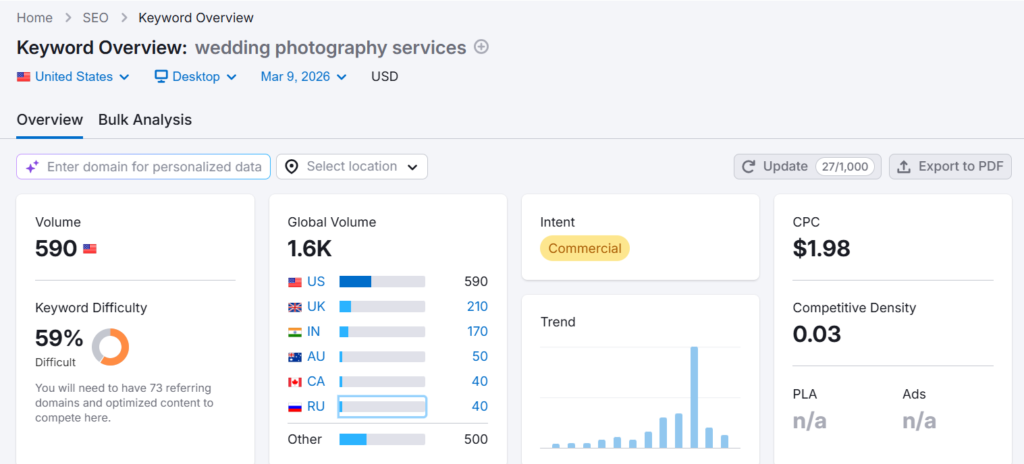
Weddings, engagements, corporate events, maternity shoots, and family sessions are searched daily. There is ongoing, year-round demand. Learning how to optimize SEO for photographers ensures your website appears when couples and event planners are actively comparing options not just casually browsing.
When done correctly, SEO is not just about traffic. It builds predictable inquiries, positions you as a trusted authority, and creates long-term business stability in a competitive market.
Best SEO Tips for Photographers
If you want real results from SEO for photographers, you need more than basic optimization. You need a structured approach that aligns with how people actually search, compare, and book. Partnering with an SEO Company For Photographers can help you implement this strategy effectively. Below are the most important SEO tips for photographers that directly impact rankings and inquiries.
Keyword Research: Target What Clients Actually Search
Effective SEO starts with understanding search intent. Instead of guessing, research the exact phrases couples and clients use, such as:
- “Wedding photographer in [city]”
- “Engagement photos at [venue name]”
- “Best event photographer near me”
Focus on service-based and location-based SEO keywords for photographers. Long-tail keywords often convert better because they reflect clear booking intent. The goal isn’t just traffic it’s qualified traffic.
Local SEO: Dominate Your City First
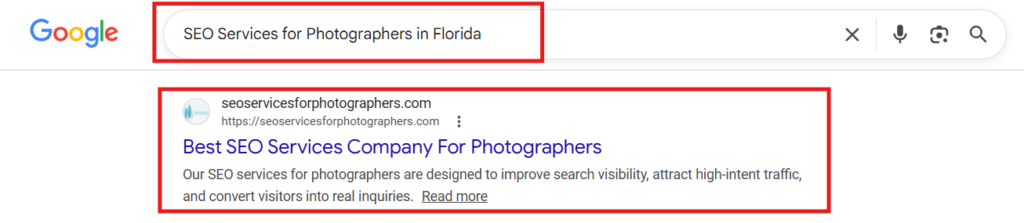
Photography is a local service business. That means your visibility in your city matters more than national rankings. Optimize:
- City-specific service pages
- Location mentions naturally within content
- NAP (Name, Address, Phone) consistency
- Local backlinks and citations
A strong local SEO strategy helps you appear in both organic results and the Google Map Pack, where many booking decisions begin.
Optimizing Portfolio Pages for Rankings
Many photographers treat portfolio pages as visual galleries only. That’s a mistake. Search engines cannot interpret images without context.
To properly optimize:
- Add keyword-focused headings (H1, H2)
- Include descriptive paragraphs about the shoot
- Mention venue names and locations
- Use optimized image file names
- Add strategic internal links
Your portfolio should rank independently for venue-specific and location-based searches.
Google Business Profile Optimization
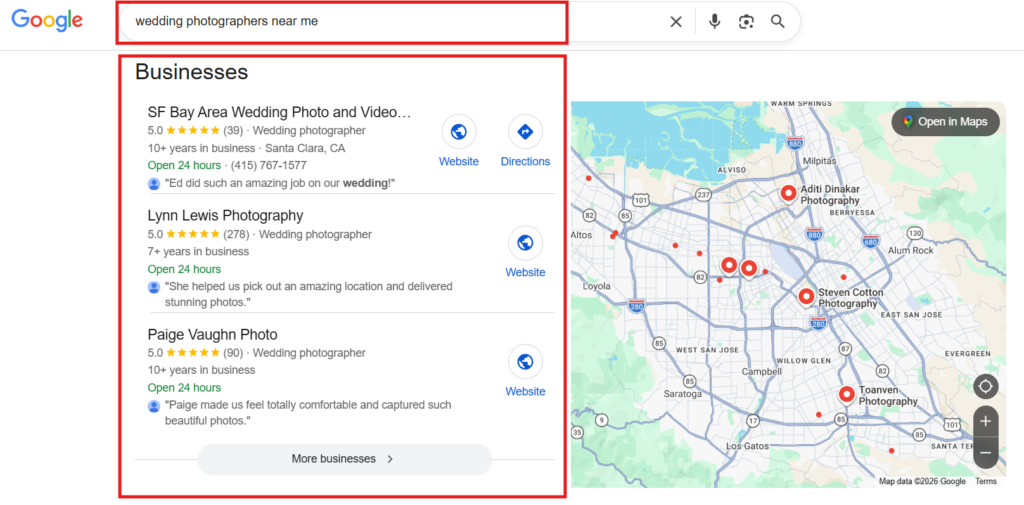
Your Google Business Profile is a critical local ranking factor. Make sure it is:
- Fully completed
- Consistently updated with photos
- Filled with relevant service descriptions
- Actively collecting reviews
Reviews influence both rankings and conversion rates. A strong profile increases visibility for “near me” searches and builds instant credibility.
Internal Linking: Build Authority across Your Site
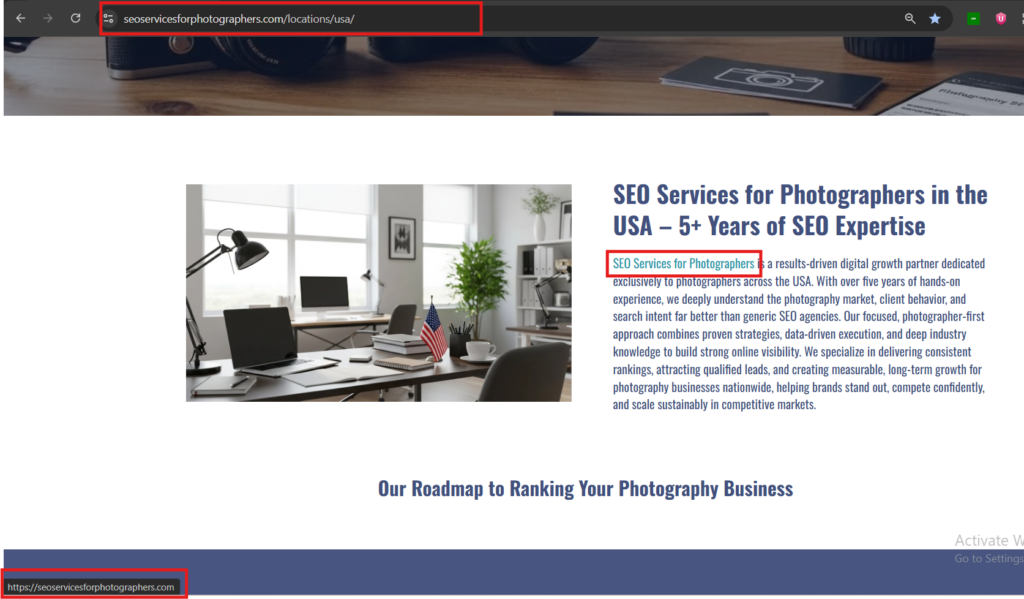
Internal linking is often overlooked but extremely powerful. Every blog post should link to:
- Your primary service pages
- Relevant location pages
- Related portfolio posts
This helps search engines understand your site structure and strengthens your topical authority. A strategic internal linking system supports faster indexing and improved keyword rankings.
How to Optimize SEO for a Photography Website
A visually stunning website is important but if it loads slowly or lacks structure, it will struggle to rank. A strong SEO website for photographers must balance design with performance and technical optimization. Here are the core elements that directly impact rankings and user experience.
Page Speed: Performance Impacts Rankings
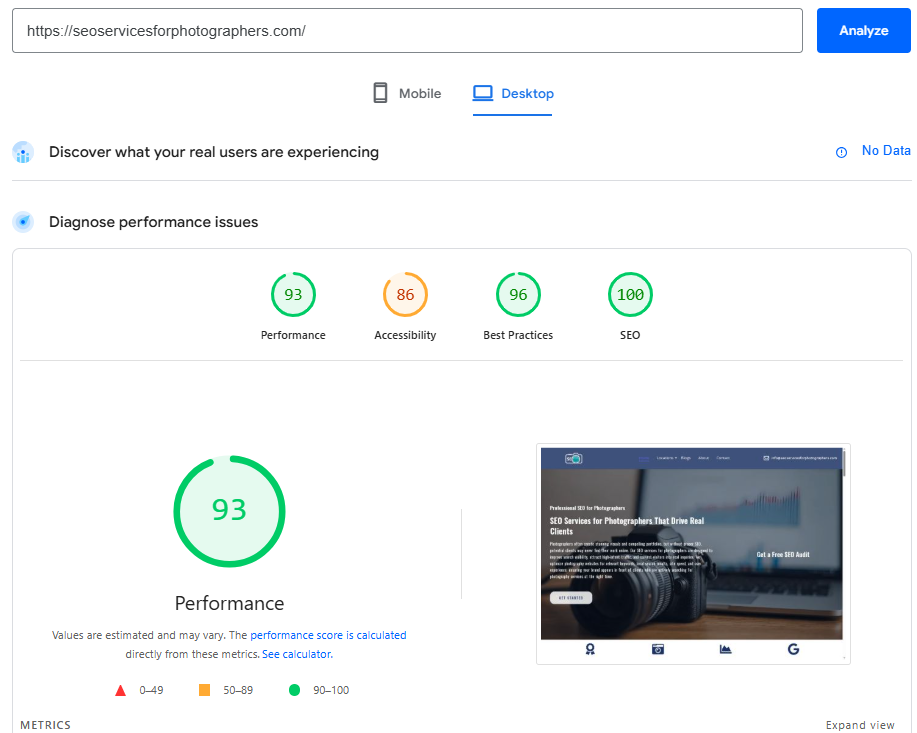
Photography websites are often image-heavy, which can slow down loading times. Search engines prioritize fast websites because speed affects user experience and bounce rates.
To improve speed:
- Reduce large image file sizes
- Enable browser caching
- Minimize unnecessary plugins
- Use a reliable hosting provider
A fast-loading site improves both search visibility and conversion rates. Slow galleries cost you rankings and inquiries.
Mobile Optimization: Most Searches Happen on Phones
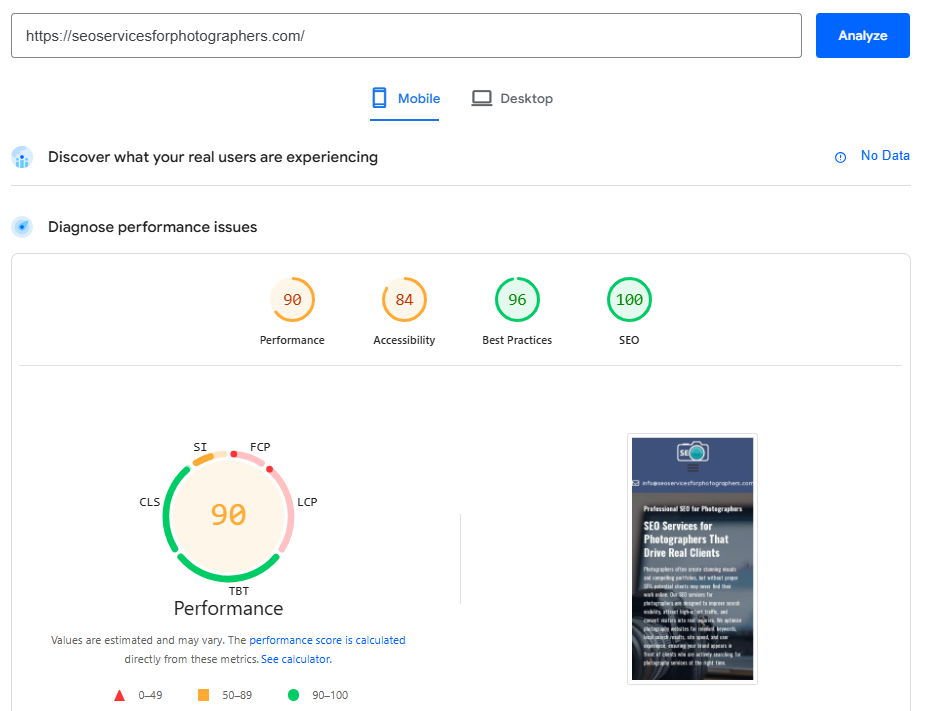
Approximately 71% of all Google searches originate on mobile, compared to roughly 26% on desktop and 3% on tablets.
The majority of wedding and event searches happen on mobile devices. If your site isn’t fully responsive, you risk losing potential clients immediately.
Mobile optimization includes:
- Responsive design that adapts to all screen sizes
- Fast mobile loading times
- Easy-to-click contact buttons
- Simple navigation
Google uses mobile-first indexing, meaning it evaluates your mobile version first. If it performs poorly, your rankings suffer.
Proper Headings: Structure Matters for SEO
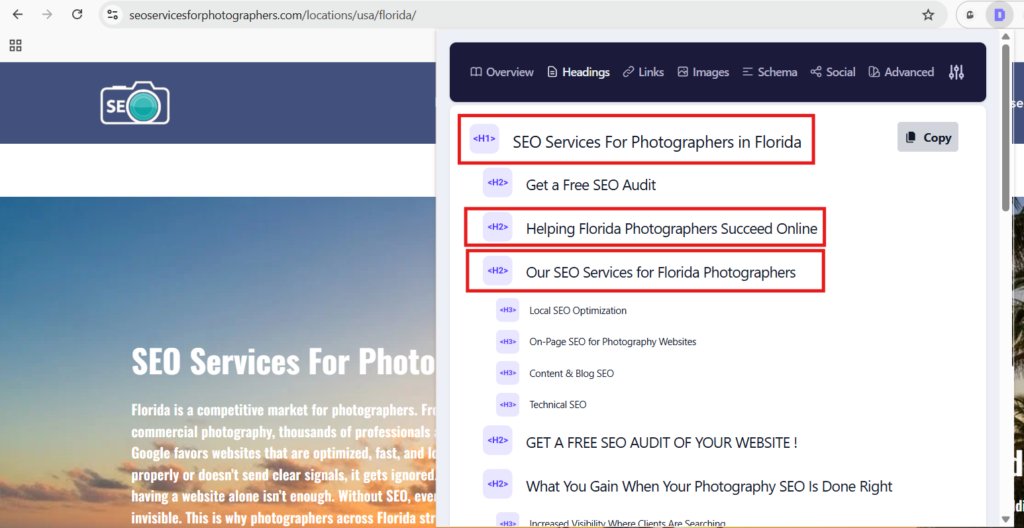
Search engines rely on page structure to understand content. Every page should have:
- One clear H1 (main topic)
- Logical H2 and H3 subheadings
- Natural keyword placement
For example, if you’re targeting “how to optimize SEO for photographers,” that phrase should appear in a heading and be supported by relevant subtopics. Clear structure improves readability and ranking potential.
Image Compression: Protect Speed without Losing Quality
“A 1-second delay in page load time (often caused by unoptimized images) leads to a 7% drop in conversions.” – Hostinger
High-resolution photos are essential for showcasing your work, but oversized files hurt performance. Compress images before uploading while maintaining visual clarity.
Best practices include:
- Using next-gen formats like WebP
- Enabling lazy loading
- Avoiding full-resolution uploads when unnecessary
Proper compression supports page speed and strengthens overall SEO performance.
Schema Markup: Help Search Engines Understand Your Business
Schema markup is structured data added to your website code that helps search engines interpret your content more accurately.
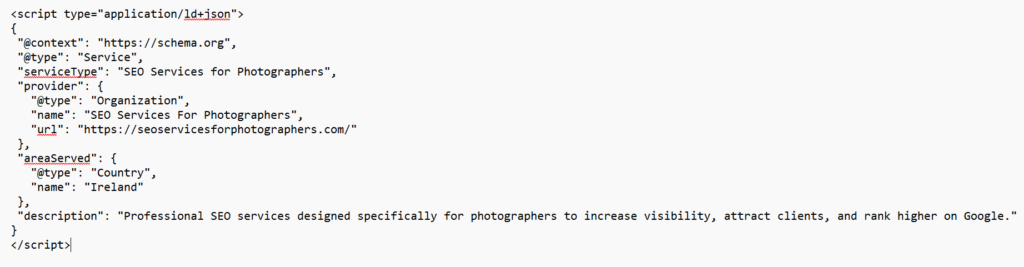
For photographers, this may include:
- Local Business schema
- Service schema
- Review schema
- FAQ schema
Schema can improve your chances of appearing in rich results, which increases click-through rates and authority.
Optimizing a photography website goes beyond aesthetics. When page speed, mobile experience, structure, and technical SEO are aligned, your website becomes both search-engine friendly and conversion-focused a powerful combination for sustainable growth.
How Photographers Should Name Images Before Upload
Most photographers spend hours editing images but upload them with filenames like IMG_2025.jpg. That single mistake costs rankings.
Image SEO is one of the most overlooked opportunities in SEO for photographers, yet it directly impacts visibility in both Google Search and Google Images. Since photography websites rely heavily on visuals, properly naming images can help individual galleries and blog posts rank independently.
Bad Example
IMG_2025.jpg
This filename gives search engines zero context. It does not describe:
- The location
- The service
- The subject
- The intent
Search engines cannot “see” images the way humans do. They rely on text signals.
Good Example
new-york-wedding-photographer-central-park.jpg
This filename clearly communicates:
- Location: New York
- Service: Wedding photographer
- Venue: Central Park
It aligns with strong SEO keywords for photographers and increases the chances of ranking for location-based and venue-based searches.
How to Structure Image File Names
Follow this format:
location + service + specific detail
Examples:
- chicago-engagement-photographer-lincoln-park.jpg
- miami-beach-elopement-photography-sunset.jpg
- austin-corporate-event-photographer-conference.jpg
Use hyphens between words (not underscores). Keep names descriptive but natural avoid keyword stuffing.
ALT Text Format for Photography Websites
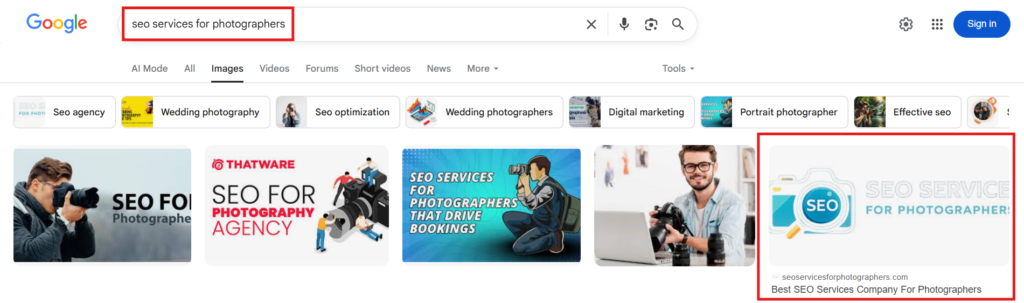
ALT text helps search engines understand what the image shows and improves accessibility.
Instead of writing: “wedding photo”
Write: “Bride and groom exchanging vows at Central Park wedding ceremony in New York”
Best practices for ALT text:
- Describe the scene naturally
- Include location if relevant
- Avoid stuffing multiple keywords
- Keep it clear and readable
Proper ALT text strengthens how to optimize SEO for photographers, especially for image-based content.
Use WebP Images for Better Performance
File format also matters. WebP images:
- Have smaller file sizes
- Load faster
- Maintain high visual quality
- Improve Core Web Vitals
Since page speed is a ranking factor, using WebP supports both performance and SEO. Many modern website builders now support automatic WebP conversion.
Why This Matters More Than You Think?
Photography websites contain hundreds sometimes thousands of images. Each one is an SEO asset. When filenames and ALT text are optimized correctly, your galleries can rank in Google Images and reinforce your overall keyword relevance.
For photographers competing in crowded cities, small technical improvements like image optimization can create a measurable competitive edge.
Why Photographers Need to Blog for SEO
Many photographers treat blogging as optional something they’ll “get to later.” In reality, blogging is one of the most powerful components of SEO for photographers. A static portfolio website rarely ranks for competitive terms on its own. Blogging creates keyword depth, topical authority, and consistent ranking opportunities that your service pages alone cannot achieve.
When done strategically, blogging is not about writing random posts. It’s about building search visibility around how clients actually search.
Fresh Content Signals to Search Engines
Search engines favor websites that are active and consistently updated. Publishing new blog posts sends freshness signals, showing that your website is relevant and maintained.
Each new blog post:
- Creates an additional indexed page
- Expands your keyword footprint
- Increases internal linking opportunities
- Improves crawl frequency
Over time, this strengthens your entire domain authority and supports faster ranking improvements.
Targeting Long-Tail Keywords That Convert
High-volume keywords like “wedding photographer” are extremely competitive. Blogging allows you to target long-tail SEO keywords for photographers that are easier to rank for and often convert better.
Examples:
- “Best outdoor wedding venues in Denver”
- “What to wear for fall engagement photos in Chicago”
- “Central Park elopement photography ideas”
These searches indicate specific intent. Couples looking up venue details or styling advice are often close to booking. Blogging helps you capture them earlier in the decision process.
Real Wedding Examples Build Trust and Rankings
Every wedding or event you shoot is a content opportunity.
Instead of simply uploading images to your gallery, create a blog post that includes:
- The venue name
- The city
- A short story about the day
- Planning tips
- Internal links to your service pages
This approach helps you rank for venue-based searches while also building emotional trust. Prospective clients see real proof of your experience.
Venue-Specific Blogs Create Local Authority
Venue-specific content is one of the smartest SEO strategies for photographers.
For example:
“Wedding at The Plaza Hotel in New York”
“Engagement Session at Griffith Observatory”
Couples frequently search venues before booking vendors. If your blog ranks for that venue, you position yourself directly in front of highly qualified prospects.
Venue blogs also attract backlinks from:
- Wedding planners
- Venue websites
- Event coordinators
This supports stronger SEO link building for photographers and increases domain authority.
Blogging is not just about content it’s about strategic visibility. When executed correctly, it expands your reach, improves rankings across your entire site, and creates a steady flow of high-intent traffic that supports long-term growth.
SEO Link Building for Photographers
“Winner Takes All: The #1 result on Google typically has 3.8 times more backlinks than the results in positions 2 through 10.” – Search Engine Land
If content is the foundation of SEO for photographers, backlinks are the authority signal that pushes rankings higher. Search engines view backlinks as votes of trust. The more relevant and high-quality websites that link to you, the more credible your website appears.
For photographers, link building doesn’t need to be complicated or spammy. It should be strategic, relationship-driven, and locally focused.
Wedding Vendor Backlinks
Every wedding you shoot involves multiple vendors:
- Wedding planners
- Florists
- Makeup artists
- DJs
- Venues
These vendors often publish real wedding features on their websites or social media. When they credit you with a link, it becomes a highly relevant backlink.
To maximize this opportunity:
- Send vendors professionally edited images they can use
- Ask for proper website credit (with a link)
- Feature them in your own blog posts and notify them
These partnerships create natural, industry-relevant backlinks that strengthen rankings.
Local Directories & Business Listings
“Businesses listed on 10+ reputable directories see an average 80% increase in visibility.” – DigitalVidya
Local SEO and link building go hand in hand. Being listed in reputable local directories helps build trust and local authority.
Examples include:
- Local business directories
- City-specific wedding directories
- Event planning platforms
Consistency in your business name, address, and phone number is critical. These citations support your visibility in map-based searches and improve local ranking signals.
Guest Posting on Industry Blogs
Guest posting remains one of the most effective SEO link building strategies when done correctly. Instead of writing generic content, contribute valuable insights to:
- Wedding blogs
- Bridal magazines
- Event planning websites
- Photography education platforms
For example, you could write about:
- “How to Choose the Perfect Wedding Photography Timeline”
- “Top Engagement Photo Locations in [City]”
High-quality guest posts not only build backlinks but also position you as an authority in your market.
Why Link Building Matters
Without backlinks, even well-optimized content can struggle to rank. Search engines use links to measure authority, relevance, and trust. A consistent, relationship-based link building strategy helps you:
- Rank for competitive keywords
- Strengthen local SEO
- Build brand credibility
- Increase referral traffic
When combined with strong content and technical optimization, strategic SEO link building for photographers becomes a powerful growth accelerator.
Should Photographers Take an SEO Course?
At some point, every photographer investing in SEO for photographers faces the same question:
Should I learn this myself, or hire professionals?
The answer depends on your stage of business, available time, and growth goals. SEO is not just about basic optimization it involves strategy, technical execution, content planning, and ongoing analysis.
Let’s break it down clearly.
DIY SEO vs Hiring an Agency
DIY SEO (Taking a Course)
Pros:
- Lower upfront cost
- Full control over your strategy
- Long-term knowledge asset
Cons:
- Steep learning curve
- Time-consuming research and testing
- Slower implementation
- Risk of mistakes that delay rankings
An SEO course for photographers can teach fundamentals like keyword research, on-page optimization, and blogging strategy. However, applying that knowledge consistently while running a photography business can be challenging.
Hiring an SEO Agency
Pros:
- Professional strategy from day one
- Technical expertise
- Faster execution
- Data-driven decisions
Cons:
- Financial investment required
- Requires trust and collaboration
An experienced agency already understands how to optimize SEO for photographers, including local SEO, link building, content clusters, and technical performance improvements.
Time vs Money: The Real Comparison
SEO is not just about money it’s about time leverage.
If you spend:
- 5–10 hours per week learning and implementing SEO
- Months testing strategies
- Weeks fixing technical issues
That time comes directly from marketing, client work, editing, or shooting.
For new photographers with limited budgets, DIY can make sense. For established photographers booking consistently, outsourcing SEO often creates a better return because it frees time to focus on revenue-generating activities.
When Hiring Experts Is the Smarter Move
Hiring professionals becomes the better choice when:
- You want faster ranking improvements
- You operate in a competitive city
- You lack technical confidence
- Your goal is scaling, not experimenting
- You want predictable lead generation
SEO is a long-term asset. Mistakes made early can delay growth for months. If your goal is serious business expansion, working with experts who specialize in SEO website strategies for photographers can significantly accelerate results. Top of Form